
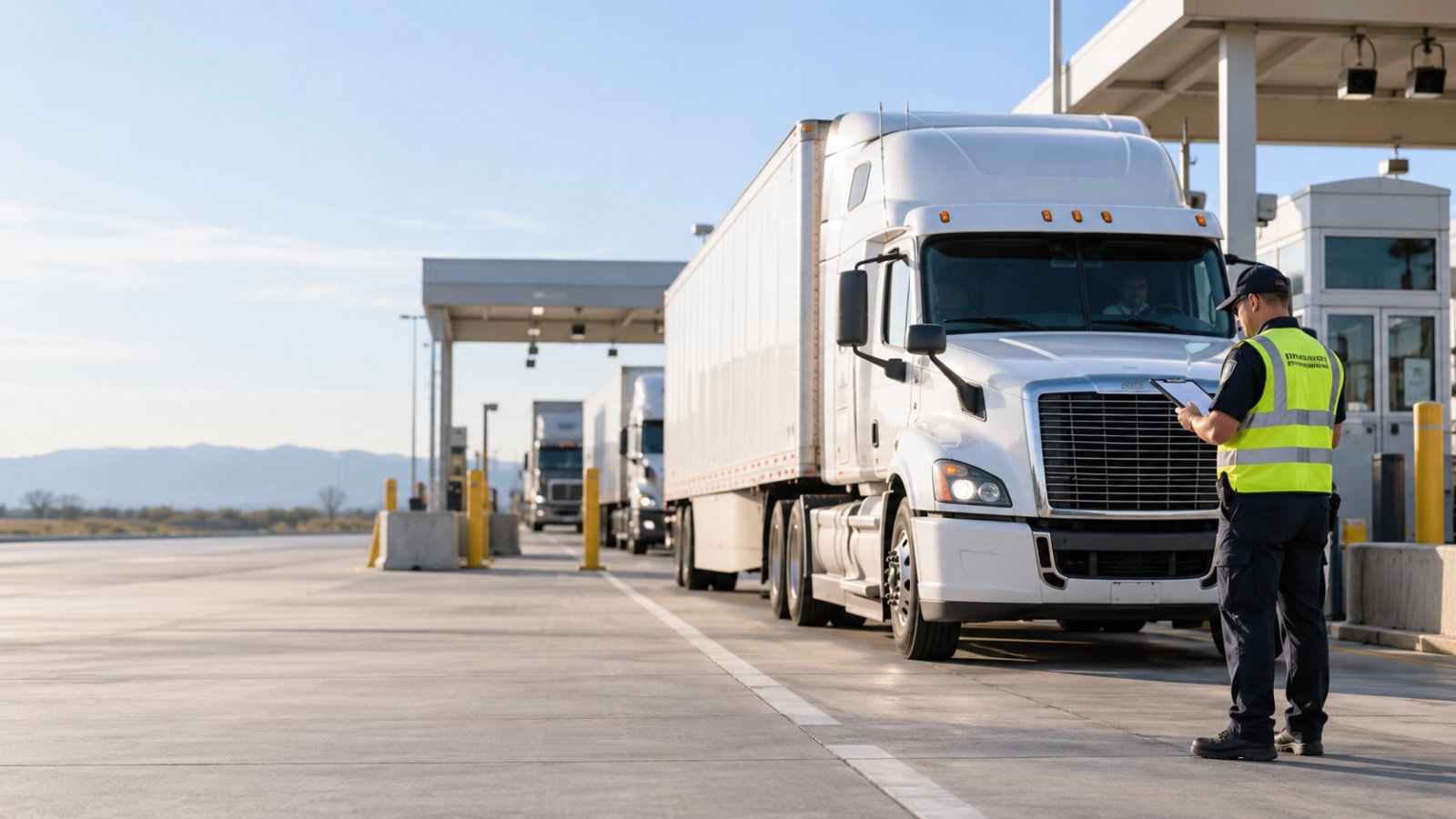
Cross border logistics services require careful carrier verification before freight leaves the warehouse. Brokers and shippers need to confirm that the trucking company has the correct FMCSA operating authority, valid insurance, acceptable safety records, and permission to complete the planned route.
An active USDOT number alone is not enough. A Mexican carrier authorized to operate within a U.S. border commercial zone, for example, cannot automatically transport freight to an inland destination such as Dallas or Chicago.
The same scrutiny applies to business identity. A legitimate carrier's registration details can be misused by someone who is not authorized to represent that company.
This guide explains how to verify U.S., Canadian, and Mexican carriers, check MC and MX numbers, assess safety and insurance records, and prevent unauthorized freight transfers.
Why Cross-Border Carrier Vetting Requires Stricter Standards

Cross-border freight movements involve more than scheduling a truck and preparing customs paperwork.
A shipment traveling from Monterrey, Mexico, to Dallas, Texas, may involve a Mexican trucking company, a customs broker, a border transfer facility, and a separate U.S. motor carrier.
Each business performs a different function. Each must have the credentials and permissions required for its part of the shipment.
The carrier collecting freight at a Mexican warehouse may not be the company delivering it to the final U.S. consignee.
That arrangement can be legitimate, but the broker should know about it before dispatch.
When the actual transportation arrangement is unclear, problems can develop at the border, during a trailer transfer, or at the final delivery location.
Cross-Border Transportation Involves Different Authorities
The Federal Motor Carrier Safety Administration (FMCSA) regulates commercial motor carrier safety and administers federal operating authority requirements in the United States.
U.S. Customs and Border Protection (CBP) oversees customs processing and border security requirements for goods entering the country.
These responsibilities are separate.
FMCSA records help establish whether a motor carrier has the required registration and operating authority.
CBP requirements address matters such as cargo reporting, customs entry, security procedures, and admissibility.
A carrier can have active FMCSA authority while the shipment still lacks the documentation required for customs clearance.
Similarly, participation in a CBP trusted trade program does not replace a carrier's operating authority or insurance obligations.
A practical cross-border review should answer two questions:
-
Is the carrier authorized to perform the proposed transportation?
-
Are the customs and border requirements for that movement being handled by the responsible parties?
Do not assume that confirmation of one resolves the other.
Commercial-Zone Authority Is Not the Same as Long-Haul Authority
Mexican motor carriers can operate under different FMCSA registration arrangements depending on where they intend to transport freight.
A carrier authorized for operations within designated U.S. border commercial zones does not automatically have permission to provide long-haul transportation to destinations beyond those areas.
For example, a carrier may be authorized to transport freight into the commercial zone around Laredo, Texas.
That does not necessarily authorize the same carrier to move the shipment to Dallas.
A Mexico-domiciled carrier seeking to transport qualifying international freight beyond the designated border commercial zones needs the appropriate long-haul operating authority.
The distinction affects how brokers arrange transportation.
One shipment may be handled by a Mexican carrier up to an authorized border transfer point, followed by a U.S. carrier responsible for the inland leg.
Another may be transported inland by a Mexico-domiciled carrier holding the required long-haul authorization.
Both arrangements require the broker to identify the companies actually performing the work.
Before assigning a load, confirm where the carrier is authorized to operate and whether that authority covers the planned movement.
FMCSA describes the applicable categories in its cross-border operating requirements for Mexico-domiciled motor carriers.
The Main Risks for Freight Brokers and Shippers
Cross-border carrier selection creates several risks that are easy to overlook when a shipment is booked under time pressure.
Operating authority problems
A carrier may be registered with FMCSA but lack the authority required for the planned route or transportation service.
Insurance gaps
Required liability filings may be missing, inactive, or inconsistent with the operating carrier. Cargo insurance may also be unsuitable for the shipment.
Safety concerns
Recent roadside inspections, out-of-service violations, and crash records may reveal operating problems that deserve further investigation.
Carrier impersonation
A fraudulent dispatcher may use a legitimate trucking company's name and registration numbers to obtain a load.
Unauthorized load transfers
The contracted carrier may hand the shipment to another transportation provider without the required authorization or disclosure.
Customs documentation problems
Missing shipment information, inconsistent documents, or unclear responsibilities may cause border delays.
Cabotage violations
A foreign carrier may be offered a domestic U.S. movement that it is not permitted to perform.
These issues are often connected.
An unauthorized carrier substitution, for instance, can create insurance, safety, and customs problems at the same time.
The simplest safeguard is to identify every operating carrier before the shipment moves and verify the credentials required for its assigned leg.
Key Differences: US DOT, MC, and MX Numbers Explained
USDOT, MC, and MX numbers appear frequently in cross-border transportation documents.
They are not interchangeable.
Each identifier serves a different purpose in FMCSA's registration system, and none should be treated as proof of unrestricted authority to transport freight throughout the United States.
What Is a USDOT Number?
A USDOT number identifies a regulated motor carrier or other covered transportation entity within FMCSA's safety registration system.
It links the company to available regulatory records, including:
-
Business identification information.
-
Operating classifications.
-
Roadside inspection history.
-
Reportable crash involvement.
-
Available safety ratings.
-
Certain enforcement and operating restriction information.
For brokers, the USDOT number is often the starting point for identifying the motor carrier and reviewing its safety history.
However, an active USDOT registration does not necessarily mean the company is authorized to perform interstate for-hire transportation.
Some private carriers and other transportation operations have different registration obligations.
The type of operation determines which authority requirements apply.
What Is an MC Number?
An MC Number is associated with operating authority issued through FMCSA's economic registration system.
It is commonly used when checking the authority of interstate for-hire property carriers.
Certain brokers and other transportation businesses also operate under FMCSA authority requirements.
The specific authority type matters.
A property broker may arrange transportation without holding authority to operate commercial trucks as a motor carrier.
A registered motor carrier, on the other hand, does not automatically possess broker authority.
Before approving a shipment, compare the company's authority type with the service it intends to provide.
For an interstate for-hire trucking movement, confirm that the operating carrier has the necessary property carrier authority.
For a business arranging transportation as a broker, confirm the relevant broker registration and authority.
The name shown in the federal record should also match the business taking responsibility for the service.
What Is an MX Number?
An MX Number is an identifier associated with FMCSA registration for Mexico-domiciled motor carriers.
Mexican carriers operating in the United States are subject to registration requirements that depend on the proposed transportation.
A carrier intending to operate within designated border commercial zones generally follows the applicable commercial-zone registration process.
A carrier seeking to transport qualifying international cargo beyond those zones requires the appropriate long-haul operating authority.
The existence of an MX Number does not establish that every application has been approved.
It also does not prove that the carrier may operate beyond commercial zones.
Always confirm the issued authorization and its scope, not simply the presence of an MX Number.
USDOT, MC, and MX Number Comparison
| Identifier | What it identifies | Main verification question |
|---|---|---|
| USDOT Number | Regulated transportation entity for FMCSA safety purposes | Does the registration match the actual carrier, and what do its safety records show? |
| MC Number | Operating authority associated with covered motor carrier or intermediary registration | Is the required authority active and suitable for the service? |
| MX Number | Mexico-domiciled motor carrier registration | Does the carrier have the authorization required for its intended U.S. operations? |
Why the Correct Number Matters
Consider a broker reviewing a carrier packet for a shipment moving from Guadalajara to a distribution center in Texas.
The packet includes a USDOT number, an MX Number, and an insurance certificate.
Those documents provide useful information, but they do not establish that the carrier is ready for approval.
The broker still needs to confirm:
-
The identifiers belong to the company offering transportation.
-
The required operating authorization has been issued.
-
The authority covers the proposed route.
-
Applicable insurance requirements are satisfied.
-
Available safety records do not reveal unresolved concerns.
-
The dispatcher is authorized to represent the carrier.
-
Any additional carriers handling the shipment have been identified.
A usdot mc number lookup can help establish the company's federal registration details.
For a Mexico-domiciled carrier, the review must also establish the scope of its MX-related operating authorization.
If the shipment involves more than one motor carrier, verify each company separately.
One carrier's authority does not automatically extend to another legal entity.
Step-by-Step Carrier Vetting Checklist for Cross-Border Freight

A carrier vetting checklist should make dispatch decisions easier, not create unnecessary paperwork.
The objective is to establish who is moving the freight, whether that company can legally perform the service, and whether material safety or insurance concerns require attention.
For cross-border loads, the review should also identify where the carrier's responsibility begins and ends.
1. Run an MC MX Number Lookup for Active FMCSA Authority
Begin with the carrier's legal business information.
Request the following details:
-
Legal business name.
-
Registered DBA name, if applicable.
-
USDOT number.
-
MC or MX Number, where applicable.
-
Business address.
-
Primary business telephone number.
-
Authorized dispatch contact.
-
Country of domicile.
-
Planned pickup and delivery locations.
-
Details of any border transfer or additional operating carrier.
Compare these details with current FMCSA registration information.
A carrier mc number lookup through MC Look Up can help identify the carrier and review available federal credentials before the load is assigned.
For Mexico-domiciled carriers, an mc mx number lookup should be followed by confirmation that the appropriate commercial-zone or long-haul authorization is active.
Verify the Scope of Mexican Carrier Authority
The proposed route determines which authorization needs to be checked.
Commercial-zone operations
Mexico-domiciled carriers seeking authority for covered operations within designated U.S. border commercial zones generally use FMCSA's Form OP-2 registration process.
The required Certificate of Registration must be issued before the carrier performs the covered operations.
Commercial-zone registration should not be treated as permission to move any shipment to any U.S. destination.
Long-haul operations
Mexico-domiciled carriers seeking authority to transport qualifying international cargo beyond designated border commercial zones use the applicable long-haul registration process.
FMCSA identifies Form OP-1(MX) for this category.
Applicants are subject to additional requirements, including a Pre-Authorization Safety Audit before initial long-haul authority is granted.
Submitting an application does not create operating authority.
The carrier must receive the necessary authorization before performing the transportation.
Check for Inactive or Restricted Authority
Do not rely on an old operating authority certificate without checking the current status.
Look for:
-
Inactive or revoked authority.
-
Pending authority that has not been granted.
-
Applicable out-of-service orders.
-
Authority that does not cover the proposed movement.
-
A mismatch between the registered carrier and the company named on the shipping documents.
If the required authority is absent or the carrier is prohibited from performing the movement, do not release the load.
Escalate the issue and obtain a clear resolution before dispatch.
Verify the Actual Operating Carrier
The company negotiating the freight rate may not be the company supplying the truck.
That is particularly relevant when a shipment involves a border transfer.
Suppose one carrier collects freight at a factory in Mexico and another carries it from a U.S. transfer facility to the consignee.
The broker should know which company is responsible for each movement.
Confirm the identity and relevant credentials of both operating carriers.
If a different trucking company appears at pickup, verify the change before releasing cargo.
An unfamiliar carrier should not be accepted simply because its driver knows the pickup reference or shipment destination.
2. Verify Cross-Border Insurance Filings (Form BMC-91 / BMC-91X)
Insurance review should establish whether the carrier meets applicable federal financial responsibility requirements and whether its commercial coverage is suitable for the shipment.
These are not the same thing.
Federal liability requirements generally address specified bodily injury and property damage exposure arising from motor carrier operations.
Cargo coverage addresses different risks and must be evaluated separately.
Understanding Federal BIPD Requirements
Federal minimum financial responsibility requirements are primarily addressed in 49 CFR Part 387.
The applicable minimum depends on the operating category, vehicle, and commodities transported.
| Covered operation | Federal BIPD minimum |
|---|---|
| Non-hazardous interstate for-hire property transportation using vehicles with GVWR of 10,001 pounds or more | $750,000 |
| Non-hazardous interstate for-hire property transportation using vehicles with GVWR below 10,001 pounds | $300,000 |
| Certain hazardous-material transportation operations | $1,000,000 |
| Specified high-risk hazardous-material transportation | $5,000,000 |
These amounts are federal minimums for the listed operations.
They do not establish how much insurance a shipper should require for a particular commodity or shipment value.
Mexico-domiciled carriers performing long-haul transportation in the United States must meet applicable federal financial responsibility requirements.
Commercial-zone operations also have specific insurance and proof-of-coverage obligations.
The carrier's authorization and operating arrangement determine which requirements apply.
What Are Forms BMC-91 and BMC-91X?
Forms BMC-91 and BMC-91X are used to provide evidence of specified motor carrier public liability insurance to FMCSA.
Form BMC-91X can support a filing involving multiple insurers.
Other authorized financial responsibility mechanisms may apply, including a qualifying surety arrangement.
A Certificate of Insurance is different.
A COI summarizes policy information, such as the named insured, insurance carrier, coverage limits, and effective dates.
It does not replace a required FMCSA filing or independently change the terms of an insurance policy.
Check both the applicable federal filing information and the commercial coverage needed for the freight.
Cross-Border Insurance Checklist
Before approving a carrier:
-
Confirm the applicable FMCSA financial responsibility filing.
-
Compare the insured company's name with the operating carrier's legal identity.
-
Review coverage dates and relevant cancellation information.
-
Obtain a current Certificate of Insurance.
-
Confirm that the policy covers the relevant transportation operation and territory.
-
Check motor truck cargo coverage for the shipment's commodity and value.
-
Ask about relevant exclusions, deductibles, and restrictions.
-
Contact the insurance agent or insurer using independently verified contact information when clarification is needed.
Consider a shipment of industrial equipment moving from Mexico to a U.S. manufacturing plant.
The carrier may meet the applicable federal liability minimum while the available cargo coverage is insufficient for the equipment's value.
The shipper should resolve that issue before the equipment is loaded.
The same principle applies to refrigerated goods, pharmaceuticals, and other sensitive freight.
A policy may have conditions affecting temperature-related losses, theft, unattended equipment, or specialized cargo.
Do not assume every loss is covered because the COI lists a cargo policy.
For federal filing requirements, consult FMCSA's insurance filing requirements.
3. Audit Safety Measurement System (SMS) Scores and Crash History
A carrier may have the correct authority and insurance but still present serious safety concerns.
FMCSA's Safety Measurement System (SMS) uses available safety information to identify carriers that may warrant further attention.
The system organizes violations and related information into seven Behavior Analysis and Safety Improvement Categories, known as BASICs.
They cover:
-
Unsafe Driving: Speeding, reckless driving, and other relevant unsafe driving violations.
-
Hours-of-Service Compliance: Driving-time, duty-status, and related violations.
-
Driver Fitness: Licensing, medical qualification, and driver qualification issues.
-
Controlled Substances and Alcohol: Relevant drug and alcohol violations.
-
Vehicle Maintenance: Defects involving brakes, tires, lights, and other components.
-
Hazardous Materials Compliance: Applicable hazardous-material transportation violations.
-
Crash Indicator: Reportable crash involvement evaluated under SMS methodology.
SMS generally uses a rolling 24-month period of relevant inspection and crash information.
Not all BASIC results are publicly available. For property carriers, the Crash Indicator and Hazardous Materials Compliance BASIC results are not publicly displayed.
That does not prevent a broker from reviewing available inspections, crashes, and other relevant safety records.
How to Interpret SMS Scores
SMS percentiles reflect relative performance within applicable comparison groups.
Higher percentiles generally indicate less favorable safety results.
However, the score does not represent the probability that a truck will crash.
It is also not the carrier's official federal safety rating.
FMCSA intervention thresholds vary by BASIC and carrier category.
Rather than using one number as an automatic rejection rule, review the underlying violations.
Look for patterns.
Repeated brake-related violations, for example, may indicate maintenance problems.
Recurring hours-of-service violations may raise concerns about dispatch scheduling or driver supervision.
A single minor violation should not be treated the same way as several recent serious out-of-service findings.
For carriers with limited inspection history, there may be insufficient public information for a strong comparison.
In those cases, other verification steps become more important.
Review the Carrier's Official Safety Rating
FMCSA's official safety ratings are separate from SMS results.
A motor carrier may be classified as:
-
Satisfactory: The applicable evaluation found adequate safety management controls.
-
Conditional: FMCSA identified deficiencies in safety management controls.
-
Unsatisfactory: The evaluation found inadequate safety management controls, subject to applicable operating consequences.
-
Not Rated: No federal safety rating has been assigned.
A Not Rated designation does not automatically mean the carrier is unsafe.
A Satisfactory rating also does not guarantee that recent operating problems are absent.
For a Conditional carrier, examine the relevant concerns and available corrective action information.
For an Unsatisfactory carrier, determine whether applicable operating prohibitions are in effect.
Never confuse a poor SMS percentile with an out-of-service order. They have different implications.
Examine Crash and Inspection Patterns
Crash records should be reviewed in context.
A reportable crash does not necessarily mean the carrier or driver caused the accident.
Fleet size and operating activity can also affect the number of recorded events.
Focus on:
-
Recent reportable crashes.
-
Repeated vehicle out-of-service violations.
-
Serious brake and tire defects.
-
Driver qualification concerns.
-
Hours-of-service violations.
-
Unsafe driving patterns.
-
Relevant enforcement or operating restrictions.
If the carrier has repeated maintenance violations, ask what changes have been made to its inspection and repair procedures.
If the company has recurring driver qualification problems, request an explanation of how qualifications are checked before dispatch.
A clear response supported by appropriate records is more useful than a general promise that the problem has been fixed.
4. Check for Chameleon Carrier Red Flags and Rapid Entity Changes
Chameleon Carriers are generally understood as trucking businesses that change or reestablish their identities to avoid enforcement consequences, liabilities, or scrutiny connected to earlier operations.
A newly registered carrier is not automatically suspicious.
Companies reorganize, change ownership, create subsidiaries, and open new operations for legitimate reasons.
Cross-border transportation also involves businesses with related entities in Mexico, Canada, and the United States.
The concern is whether a new identity is being used to hide material problems.
Common Warning Signs
Investigate situations where:
-
A new carrier claims a long operating history without explaining the connection.
-
Contact information appears associated with another company that has serious enforcement problems.
-
Ownership information changes frequently without a clear explanation.
-
Registration documents identify different legal businesses.
-
Related entities appear to use each other's authority.
-
Dispatch contacts change unexpectedly before pickup.
-
A carrier cannot explain who is responsible for the shipment.
These signs require investigation, not an automatic accusation.
Two legitimate carriers may share a business address or administrative service.
The important question is whether the carrier's business identity and operating authority can be confirmed.
Practical Entity Verification
Start with the legal name shown in FMCSA records.
Compare it with the name on the carrier packet, insurance documents, transportation agreement, and rate confirmation.
If several related businesses are involved, identify which entity owns the operating authority and which will physically transport the cargo.
Do not assume that an MX Number held by a Mexican company authorizes a separately registered U.S. company to operate.
Ask the carrier to explain material discrepancies and provide appropriate supporting documents.
Use independently verified contact details for important confirmations.
If the explanation does not resolve the concern, hold the approval until the operating arrangement is clear.
Navigating Cabotage Rules and Customs Compliance (C-TPAT / FAST)
A foreign carrier's permission to transport international freight into the United States does not automatically authorize domestic freight movements between U.S. locations.
Cross-border dispatchers must distinguish international transportation from domestic work.
They must also establish which parties are responsible for customs documentation and border procedures.
Understanding Cabotage Regulations
Cabotage Regulations restrict certain domestic transportation activities performed by foreign carriers.
For trucking, the principal concern is whether a foreign carrier may transport merchandise between two points within the United States.
Mexican carriers holding the appropriate long-haul authority may transport qualifying international cargo between Mexico and authorized U.S. destinations.
That authorization does not provide unrestricted access to domestic U.S. freight.
Canadian carriers are also subject to applicable restrictions on domestic transportation.
The exact treatment of a proposed movement depends on the relevant transportation and customs rules.
A Practical Cabotage Example
A Mexico-domiciled carrier transports an international shipment from Monterrey to Dallas using the required authority.
After unloading, a dispatcher offers the driver a separate load from Dallas to Houston.
The second shipment has both its pickup and delivery points within the United States.
The carrier cannot assume its authorization for international freight allows it to accept that domestic movement.
The proposed shipment must be assessed under the applicable cabotage rules.
If the movement is not permitted, the load should be assigned to an appropriately authorized carrier.
Why Backhaul Planning Requires Attention
Backhaul planning can create compliance problems when dispatch decisions focus only on available equipment.
A driver may have empty trailer capacity after completing an international delivery.
That does not automatically mean the carrier may transport any freight offered for the return journey.
Before accepting a backhaul, confirm:
-
Where the shipment originates.
-
Where the shipment will be delivered.
-
Whether the movement is international or domestic.
-
Which legal entity will perform the transportation.
-
Whether the carrier's authority covers the service.
-
Whether applicable cabotage restrictions permit the movement.
Cross-border scheduling should account for these limits before a freight rate is accepted.
What Is C-TPAT?
The Customs Trade Partnership Against Terrorism (CTPAT), also commonly written as C-TPAT, is a voluntary supply chain security program administered by U.S. Customs and Border Protection.
Eligible businesses participate by meeting applicable supply chain security requirements.
For highway carriers, relevant security practices may include:
-
Trailer and container security.
-
Access controls.
-
Employee and personnel security procedures.
-
Business partner screening.
-
Security awareness training.
-
Cargo protection measures.
-
Procedures for identifying and reporting suspicious activity.
CTPAT participation can provide benefits under CBP's trusted trade framework, subject to eligibility and program requirements.
However, CTPAT is not FMCSA operating authority.
A CTPAT participant still needs the appropriate motor carrier registration, authority, and insurance for the transportation it performs.
Shippers should keep these verification categories separate.
CBP publishes program information through its CTPAT program.
Understanding FAST Certification
The Free and Secure Trade (FAST) program supports expedited processing for eligible commercial truck drivers and qualifying commercial shipments at participating border crossings.
Drivers must meet applicable program eligibility and screening requirements.
FAST approval is not a motor carrier safety rating.
It also does not establish that a trucking company has the required operating authority.
Use of FAST lanes depends on applicable eligibility conditions, including relevant trusted trade participation requirements.
A driver holding FAST approval does not mean that every shipment being transported automatically qualifies for expedited processing.
The shipment must still satisfy applicable customs requirements.
CTPAT and FAST Comparison
| Program | Main purpose | What it does not establish |
|---|---|---|
| CTPAT | Voluntary supply chain security partnership with CBP | FMCSA authority, insurance coverage, or completed customs clearance |
| FAST | Expedited processing arrangements for eligible commercial drivers and qualifying movements | Carrier operating authority or automatic shipment eligibility |
| FMCSA registration | Motor carrier identification, safety oversight, and applicable operating authority | Customs clearance or trusted trade program participation |
Customs Compliance Before Dispatch
Customs documentation should be addressed before the truck reaches the border.
Depending on the shipment, the process may involve the importer of record, a licensed customs broker, the motor carrier, and other supply chain participants.
The transportation team should establish who is responsible for each required action.
Before pickup, confirm:
-
The importer of record and other responsible parties are identified.
-
The customs broker has the information needed for the shipment.
-
Commercial invoices and relevant documents are available.
-
Commodity descriptions are accurate and consistent.
-
Required advance cargo information is handled by the responsible party.
-
Border crossing details have been communicated.
-
Any applicable commodity permits or special documents have been addressed.
-
The driver has verified contact instructions for customs questions.
For U.S.-bound freight, applicable CBP rules may require advance electronic cargo information through the relevant systems.
Carrier registration does not establish that customs filing requirements have been satisfied.
Treat customs readiness as a separate dispatch checkpoint.
Automating Carrier Compliance to Prevent Cross-Border Freight Fraud
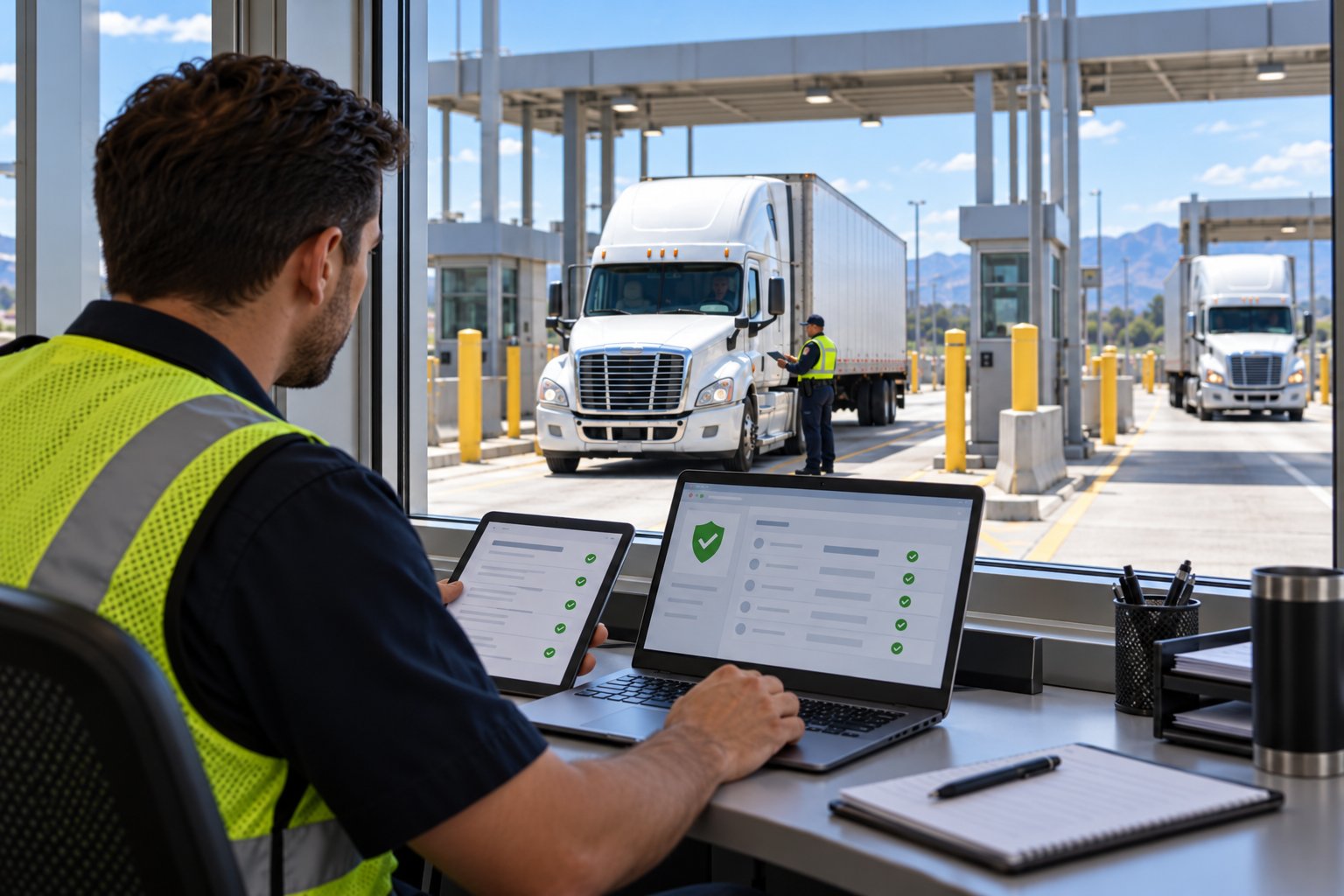
Cross-border carrier verification becomes harder when a transportation team handles many shipments and frequent carrier changes.
The problem is rarely a lack of documents.
It is that information is stored in different emails, carrier packets, shared folders, and dispatch records.
One employee may review operating authority while another checks insurance. A third may approve a last-minute truck substitution without knowing that the original carrier was already verified.
A repeatable process helps prevent those gaps.
Automation can support consistent checks and reminders, but it cannot replace direct business authentication or warehouse pickup controls.
Why Cross-Border Freight Fraud Is Difficult to Detect
International freight may pass through several businesses before reaching its final destination.
The shipper, transportation broker, customs broker, border carrier, transfer facility, and inland carrier may all communicate separately.
Fraudsters can exploit these handoffs.
They may impersonate a legitimate carrier, provide altered transportation documents, or issue unauthorized pickup instructions.
A stolen USDOT or MX Number can make an unfamiliar business appear established.
The registration number may be genuine even when the person using it is not.
This is why carrier identity checks must go beyond confirming that the number exists in a federal database.
Double-Brokering Risks in International Freight
Double-Brokering generally involves a party accepting a shipment and arranging for another transportation provider to move it without the necessary authorization or disclosure.
Consider a broker that contracts with a carrier for an international shipment.
The contracted company then passes the load to another trucking business without telling the original broker.
The actual carrier arrives at a transfer warehouse, collects the trailer, and moves the freight.
If that second carrier was never verified, the broker may not know whether it has the required operating authority or suitable insurance.
The arrangement can also create payment disputes and uncertainty about cargo responsibility.
Not every arrangement involving multiple carriers is improper.
Legitimate brokerage, authorized subcontracting, and disclosed border transfers are common parts of freight transportation.
The concern is an unauthorized or concealed transfer that bypasses the required checks.
Build Verification Into the Booking Process
A consistent workflow should follow the load from initial booking through delivery.
Before booking
Confirm the carrier's identity, authority, insurance, and available safety records.
For a Mexican carrier, establish whether it has the authorization required for the planned U.S. operations.
Before dispatch
Contact the carrier through an independently verified channel.
Confirm that the dispatcher is authorized to arrange the shipment.
Identify the carrier and equipment expected at pickup.
Before the border movement
Establish customs responsibilities and verify that the relevant shipment information is available.
Confirm which carrier will handle the crossing and whether a transfer is planned.
At pickup or transfer
Compare the arriving motor carrier with the approved transportation arrangement.
Verify unexplained truck, trailer, or driver substitutions before releasing cargo.
During transportation
Require authorized confirmation for changes to the delivery location, consignee, or other critical instructions.
After delivery
Retain relevant shipment records and document discrepancies for future carrier reviews.
This process is particularly useful when several employees work on different stages of the same load.
Automate Repeat Checks Without Assuming Data Is Final
Carrier information can change after onboarding.
Operating authority may be revoked. Insurance filings may change. Significant safety violations or new restrictions may appear.
A company that was suitable for a previous shipment should not automatically remain approved indefinitely.
Build rechecks into the dispatch process.
Useful triggers include:
-
First-time carrier onboarding.
-
Rebooking after a long period of inactivity.
-
Changes in operating authority.
-
Insurance expiration or cancellation concerns.
-
New business contact information.
-
Significant safety findings.
-
Changes to the operating carrier.
-
High-value or sensitive freight.
-
A shipment that requires a different type of authority.
A simple system can assign responsibility for each check and record when it was completed.
For example, an onboarding record can show the carrier's identifiers, authority status, insurance review date, unresolved issues, and approval decision.
When the same company is booked again, the dispatcher can compare the current information with that record.
If an important detail has changed, the shipment can be escalated before release.
Automated reminders and repeat searches help, but they should not create the impression that old information is permanently valid.
Use Carrier Trust Scores as Screening Aids
Commercial carrier verification platforms may provide trust indicators or summary scores.
These can be useful for organizing carrier information and identifying records that deserve attention.
However, a commercial trust score is not an official FMCSA safety rating.
It also cannot guarantee that the dispatcher is genuine or that the shipment will arrive safely.
When reviewing a score, examine the supporting records.
Questions worth asking include:
-
Is the required authority active?
-
Does the carrier's legal identity match the documents?
-
Is applicable insurance in place?
-
Are there serious or recurring safety violations?
-
Has the company experienced significant recent changes?
-
Are there unresolved operating restrictions?
-
Is the actual transportation arrangement clear?
A favorable score should not override an authority problem.
A less favorable score should lead to examination of the underlying concerns rather than an unsupported assumption of fraud.
How MC Look Up Supports Cross-Border Carrier Vetting
MC Look Up provides freight brokers, dispatchers, and shippers with access to carrier information derived from FMCSA records.
The platform supports the regulatory verification stage by allowing transportation professionals to search motor carrier identifiers and review relevant information.
MC Look Up can help teams:
-
Search by USDOT or MC Number.
-
Review available carrier registration details.
-
Check operating authority information.
-
Examine available insurance-related status information.
-
Review safety and crash records.
-
Identify inconsistencies requiring follow-up.
-
Repeat carrier searches before future assignments.
For cross-border loads, these checks provide a useful starting point.
Suppose a dispatcher is assigning freight to a Mexico-domiciled carrier that has not been used for several months.
The dispatcher can begin by reviewing available registration and safety information, then confirm the specific Mexican carrier authority needed for the route through current FMCSA records.
Next, the dispatcher should verify insurance, authenticate the carrier's business contact, and confirm the expected pickup arrangement.
That sequence is more reliable than accepting an old carrier packet without a fresh review.
MC Look Up supports carrier research. Customs clearance, CTPAT participation, FAST eligibility, and direct business identity authentication remain separate responsibilities.
Cross-Border Carrier Approval Decision Table
| Finding | Recommended response |
|---|---|
| Required authority is active and suitable for the route | Continue with insurance, safety, and identity checks |
| Mexican carrier has only commercial-zone authority for a proposed inland movement | Do not assign the movement without the required authority |
| Required insurance cannot be confirmed | Hold approval until the issue is resolved |
| Significant safety problems remain unexplained | Escalate for further review |
| Dispatcher identity cannot be authenticated | Do not release the shipment |
| An unexpected carrier arrives at pickup | Confirm the substitution through an authorized contact |
| Customs responsibilities are unclear | Resolve the documentation process before the border movement |
| Material registration details have changed | Reverify the carrier before approval |
The approval process should be clear enough that dispatchers and warehouse personnel reach consistent decisions.
Employees should also know whom to contact when a shipment cannot proceed under the normal process.
An unresolved identity or operating authority problem should never be treated as a routine scheduling inconvenience.
FAQ
What is the difference between an MC number and an MX number?
An MC Number is associated with operating authority issued through FMCSA's registration system, commonly including authority for U.S. interstate for-hire carriers and certain transportation intermediaries. An MX Number identifies registration associated with Mexico-domiciled motor carriers. For Mexican carriers, the critical check is whether the company holds the commercial-zone or long-haul authorization required for the planned movement.
How can you verify if a Mexican carrier has authority to operate beyond commercial zones?
Check the carrier's current FMCSA registration and operating authority information using its USDOT and MX-related identifiers. A Mexico-domiciled carrier transporting qualifying international freight beyond designated border commercial zones must hold the appropriate long-haul authority through the applicable OP-1(MX) process. An MX Number or pending application alone does not establish that authorization.
What insurance limits are required for cross-border freight into the United States?
For many covered interstate for-hire non-hazardous property carriers operating vehicles with a GVWR of 10,001 pounds or more, the federal BIPD minimum is $750,000. Certain lighter operations have a $300,000 minimum, while specified hazardous-material operations can require $1 million or $5 million. Mexico-domiciled carriers must satisfy the financial responsibility requirements applicable to their operations, and shippers should separately verify cargo insurance appropriate for the shipment.
What are US cabotage rules regarding Canadian and Mexican carriers?
U.S. cabotage rules restrict foreign motor carriers from performing unauthorized domestic freight transportation between U.S. locations. Mexican carriers with appropriate long-haul authority may transport qualifying international cargo but cannot assume they may accept unrelated domestic U.S. loads. Canadian carriers are also subject to applicable restrictions, so proposed domestic movements must be evaluated under the governing transportation and customs requirements.
Conclusion: Verify Cross-Border Carriers Before Releasing Freight
Cross border logistics services depend on more than a valid carrier number and an agreed freight rate.
Before assigning a load, brokers and shippers should confirm the operating carrier's identity, required authority, insurance, safety records, and permission to perform the planned route.
For shipments involving Mexico-domiciled carriers, the distinction between commercial-zone and long-haul authority is particularly important.
Documented carrier checks, verified dispatch contacts, and clear controls at pickup and transfer points also help prevent unauthorized freight movements and double-brokering.
MC Look Up helps transportation professionals review FMCSA-derived carrier information and make more consistent verification decisions.
Visit MC Look Up to check available carrier credentials before booking your next cross-border shipment.